
Victoria Olt “Lost Gods”

“We are still at the mercy of fate, however we choose to define it. But the lessons from the past—what our ancestors believed about life, death, and human nature—remain deeply relevant, and there’s so much we can learn from them."
On January 4th Victoria Olt Gallery unveiled a new exhibition titled Lost Gods, where intricate watercolor techniques were seamlessly blended with the themes of ancient cultures. The highlight of the exhibition was a striking 20 m² installation of paper cranes, a reference to the Japanese legend that promises a wish, often for a long life, to anyone who folds 1,000 origami cranes.
Victoria Olt described the exhibition as a continuation of her ongoing search for meaning, explaining: “Lost Gods was another step in my journey to make sense of the world. After finding little comfort in modern popular religions, I looked to the past to see what wisdom could be gained from ancient civilizations. What I discovered is that many of the struggles our ancestors faced are remarkably similar to the challenges we continue to grapple with today. We are still at the mercy of fate, however we choose to define it. But the lessons from the past—what our ancestors believed about life, death, and human nature—remain deeply relevant, and there’s so much we can learn from them."


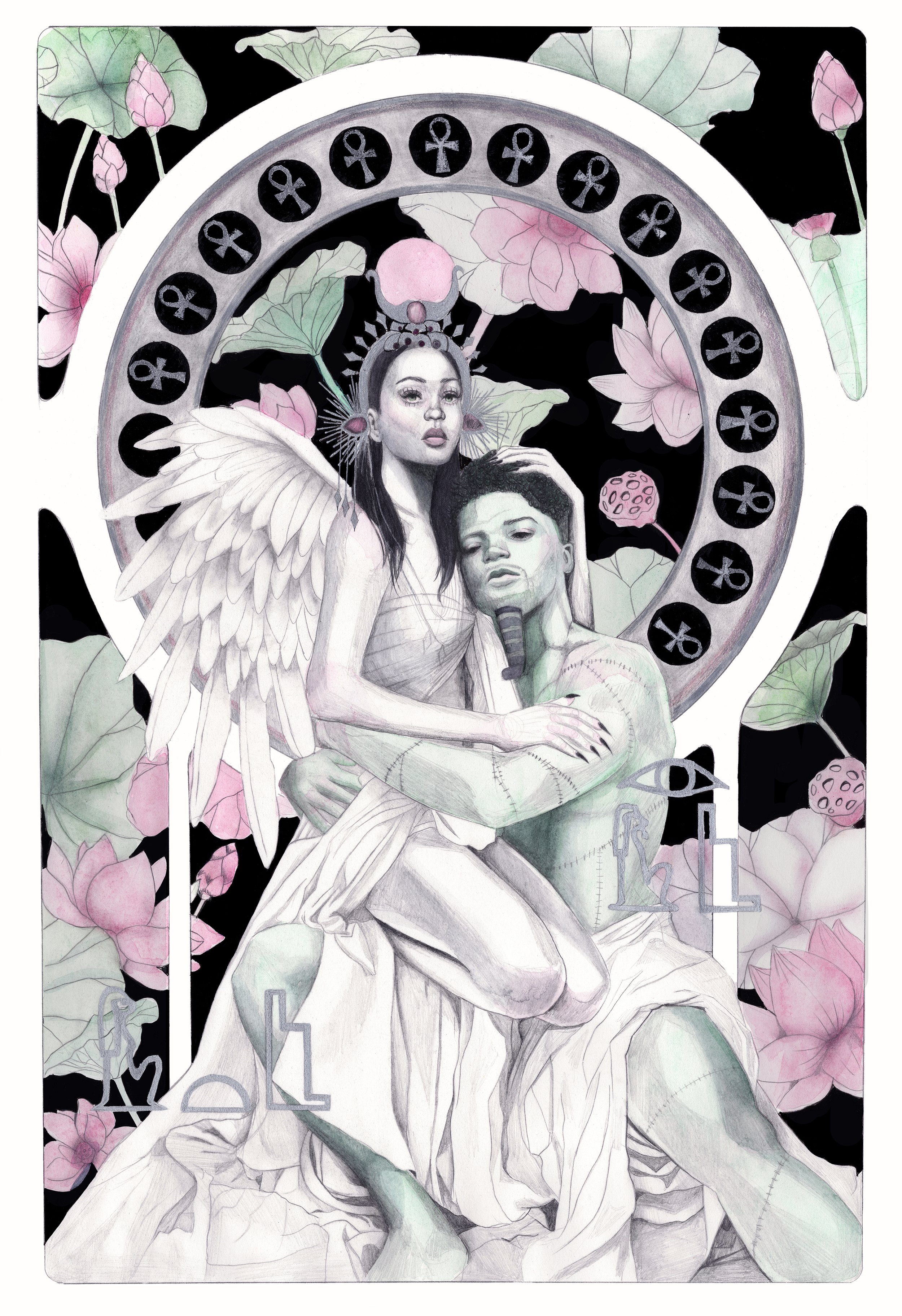
The exhibition explored a wide range of mythological figures and themes, starting with the most iconic characters from Greek mythology. Visitors were introduced to Aphrodite, the goddess of love and beauty, born from the foam of the sea, and her son Eros, whose notorious arrow, meant to strike Psyche at his mother’s command, ultimately backfired on him. The myths presented included tales of divine vengeance, destruction, human suffering, and remorse, but also preserved the belief that hope persists—like in the story of Pandora’s Box.


Nordic mythology was also prominently featured, with stories of the first humans, the Norns who governed time and fate, and Hel, the feared ruler of the underworld. The exhibition extended beyond European myths, incorporating mythical creatures from the indigenous peoples of North America, as well as tales from ancient Egypt and Mesopotamia, centered around themes of life, death, rebirth, love, and revenge.

2020
Handmade watercolor on paper.
18 x 24 in
46 x 61 cm + frame included for free in shipments within Estonia
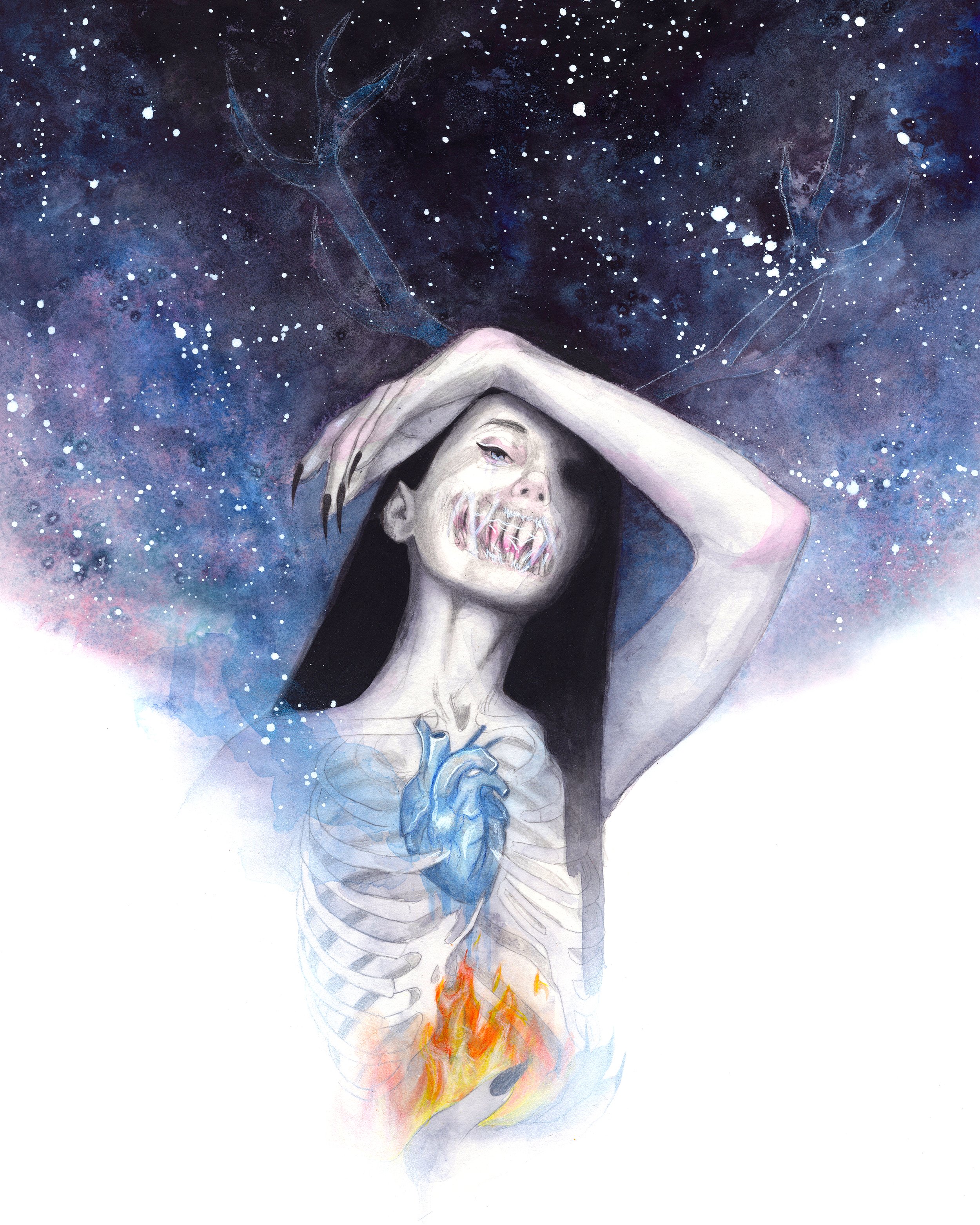
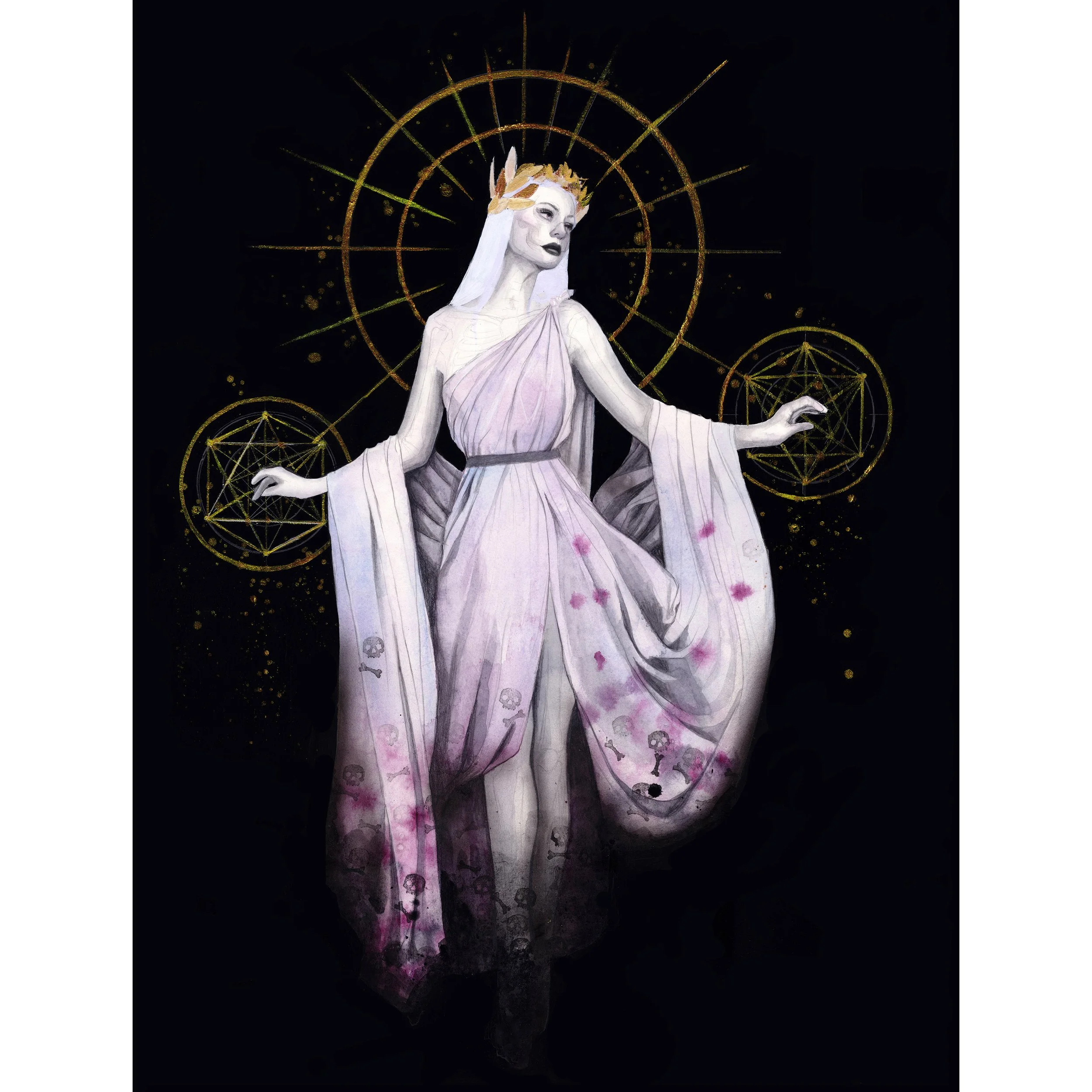
} Hel {
A daughter of the Norse God of mischief, Loki, Hel was the Goddess of death and the ruler of underworld (or sometimes called the realm of darkness), Niflheim. Her name means “hidden”
Niflheim consisted of several parts: Náströnd, the shore of corpses, a castle that was filled with snake venom, where murderers, adulterers, and others wrongdoers were sent to suffer. Those who died valiantly in battle ended up in Valhalla, but for everyone else there was Hel. Meaning, that Hel was not like the Christian hell, that was reserved for punishment and torment, but a rather more gentle realm.
The Goddess Hel is first mentioned in the 13th century Prose Edda.
More exotic myths brought a global richness to the exhibit, such as the Hawaiian fire goddess Pele and the Japanese sun goddess Amaterasu. Throughout the exhibition, many of the myths served as cautionary tales, their messages resonating as strongly today as they did in ancient times.

2020
Handmade watercolor on paper.
18 x 24 in
46 x 61 cm + frame included for free in shipments within Estonia
} Pele’s curse {
One of the most well-known myths of Hawaii is the Curse of Pele. Pele was the Goddess of fire, lightning, wind, dance and volcanoes. She is known for her fiery passion and quick temper. She is so jealous and temperamental in fact, that if anyone should remove a single rock or a bit of sand (sand and rocks being her children), then they can expect her wrath. According to the legend, those who do, will suffer bad luck as a consequence of acurse. Many believe that this was just something that the local guides invented in order to stop tourists from stealing bits of the island. Regardless, countless tourists send back bits of rock that they took from Hawaii, to undo the perceived curse of Pele.
Lost Gods invited visitors to reflect on humanity’s timeless quest for understanding and meaning, and how the echoes of ancient wisdom still hold powerful relevance in our modern world.





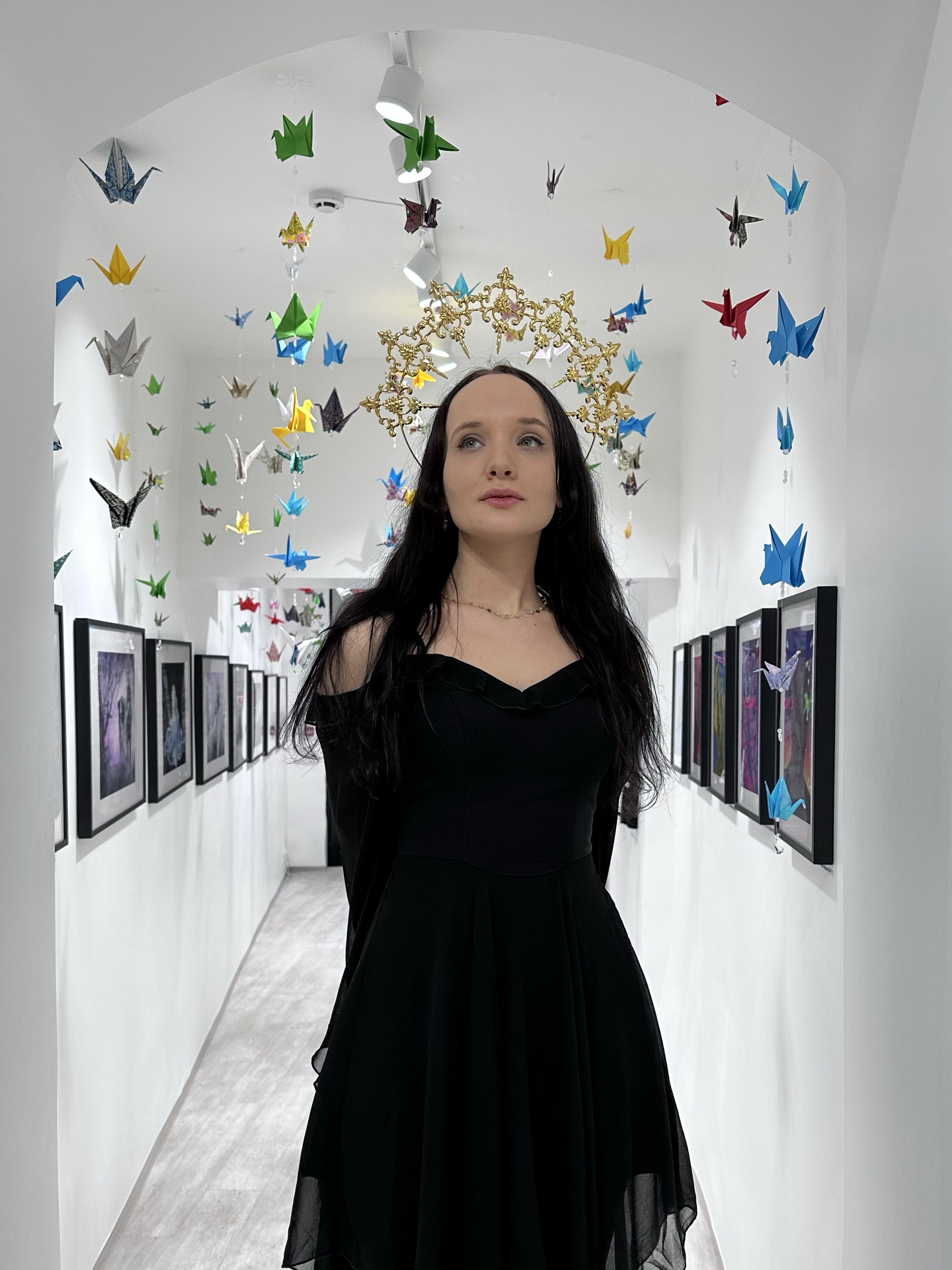
Victoria Olt is a traditional artist whose ethereal paintings fuse classical realism with the dynamic colors of contemporary art. Her work delves into the depths of the human soul, capturing the complex emotions we often try to conceal. Using mixed media, she creates captivating “windows” into inner worlds that feel both timeless and deeply personal. Her art has been exhibited in galleries across the globe and is held in numerous private collections.
Born and raised in Estonia, Victoria later moved to Spain, where she pursued a degree in Fine Arts at the University of Seville. After graduating, she worked as a freelance artist in Madrid and Amsterdam. During the height of the pandemic, she relocated to the secluded island of Nevis, where she completed the Starchild collection. In late 2021, she returned to Estonia to open the Victoria Olt Gallery.
2020
Gouache and handmade watercolor on paper.
18 x 24 in
46 x 61 cm + frame included for free in shipments within Estonia